
Why Snow Load Matters for Scaffold Safety | PEAK Scaffolding
Industry Standards

Why Snow Load Matters for Scaffold Safety

High-rise construction in the Greater Toronto Area remains vulnerable to the atmospheric volatility of the Canadian winter. To maintain site safety, it is vital to decipher the impact of snow load on temporary access systems.

Managing the "Invisible Weight"

Operating in sub-zero temperatures necessitates a shift from standard protocols toward a specialized discipline of geostructural safety. Central to this is the management of the invisible weight: the cumulative and deceptive force exerted by snow and ice on temporary structures.

In the Toronto sector, building through high-wind events requires a strategic plan that integrates regulatory compliance, metallurgical precision, and a deep understanding of the local microclimate.

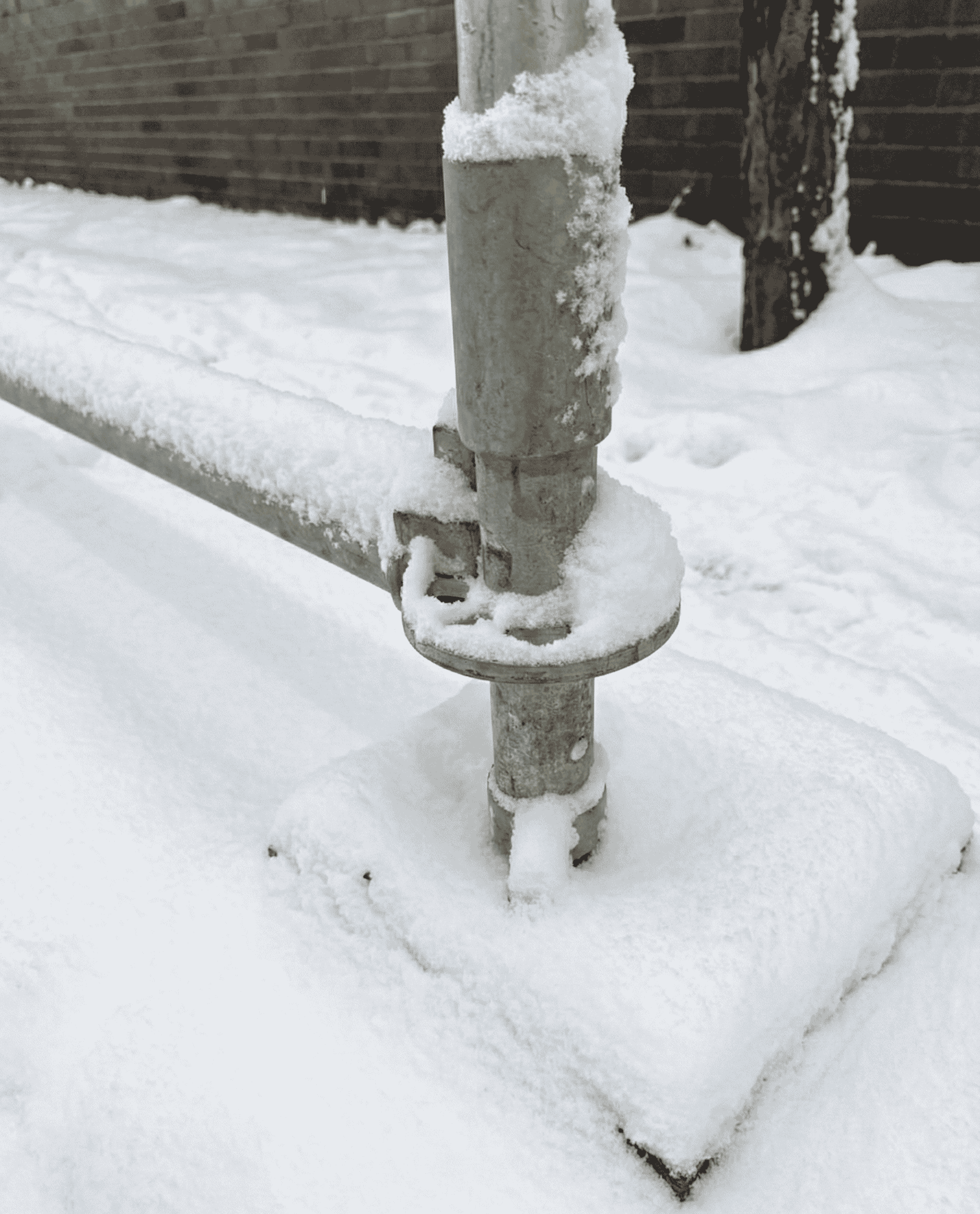
Modular scaffolding during a Toronto snow event

The Physics of Snow Accumulation

Snow is a live load that undergoes constant crystalline transformations. In Toronto's high-rise corridors, the Venturi effect accelerates wind speeds between buildings, creating uneven snow drifts that result in dangerous eccentric loading on scaffold towers.

Density Dynamics

Moisture picking up from Lake Ontario often results in heavy, wet snow. A single 30 cm accumulation can range from 15 kg/m² for dry powder to over 100 kg/m² for wet snow, which can reach a platform's maximum intended load before any labour or equipment is added.

Flash Freezing and Consolidation

The proximity to the waterfront creates a microclimate where steel decks flash freeze rapidly. As temperatures fluctuate, melting snow trickles through the pack and refreezes, creating a dense bond to the steel surface that adds significant undetected weight.

Type of Accumulation Approx. Density (kg/m³) Structural Impact
Freshly Fallen Dry Snow ~60 kg/m³ High surface area, low immediate weight.
Wind-Packed & Drifting ~375 kg/m³ Creates dangerous eccentric loading on towers.
Wet Slush & Heavy Ice ~750 kg/m³ Critical risk for light-duty access systems.
Solid Crystalline Ice ~915 kg/m³ Severe load and extreme slip hazard.

Engineering for Resilience: Ringlock Systems

The transition toward modular Ringlock systems is an engineering-driven response to the need for greater load-bearing capacity. These systems ensure that weight is transferred vertically through the centre of the standards, minimizing buckling risk.

Metric Specifications for Winter Safety

High-precision modular systems maintain a connection tolerance within 1.8 mm. This maintains 99.7 per cent vertical alignment under heavy snow. If this tolerance increases to just 3 mm due to wear, the actual load-bearing capacity of the scaffold can drop by approximately 50 per cent of its engineered value.

< 1.8 mm Connection Tolerance
~65 Tonnes Shoring Capacity
3,175+ kg Max Node Load

Metallurgy is critical in extreme cold. Utilizing hot-dip galvanized steel helps resist brittle fracture, where steel loses its ability to deform and instead cracks under the stress of thermal contraction.

Hoarding and Wind Dynamics

Enclosing a scaffold in shrink wrap protects the internal project environment but changes the relationship with the wind, creating a "sail effect."

Managing Lateral Stress

A hoarded scaffold captures wind energy and converts it into lateral pressure. Best practices dictate the use of push-pull ties that handle both tension and compression, ensuring the structure remains secure against shifting wind directions during a storm.

Pitched Roof Enclosures

Uneven snow accumulation on top of an enclosure can lead to sudden roof failure. Best practices utilize pitched truss roofs to encourage immediate shedding, preventing the dangerous buildup of wet snow weight above the crew.

Advanced Surface Management

Maintaining a safe walking surface requires a balance between effective de-icing and structural preservation. Rock salt is highly corrosive to steel and must be avoided.

The De-Icing Protocol

Professional sites utilize Calcium Magnesium Acetate (CMA). It is non-corrosive and effective at lower temperatures than sodium chloride, protecting both the galvanized coating of the decks and the building's facade.

Perforated Decking Design

Steel planks with perforated holes allow melting snow to drain immediately, preventing refreezing pools. Raised safety edges provide superior traction for boots even in wet, slushy conditions.

Physiological Capability and Labour Welfare

Safety at heights is also about worker welfare. Extreme cold lead to reduced dexterity and fatigue, increasing the risk of falls.

  • Specialized PPE: Modern low-bulk heated jackets keep core temperatures stable without creating the bulk that can compromise safety harness fit.
  • Composite-Toe Insulation: Composite-toe boots are preferred in winter because they provide better thermal insulation than steel-toe boots, which can draw heat away from the toes.
  • Battery-Backed Visibility: December in Toronto provides fewer than nine hours of daylight. 5000K LED illumination is essential, along with emergency stair lighting for egress during winter power failures.

Smart Assets and Predictive Monitoring

The industry is shifting toward treating scaffolding as a digital asset to monitor risks that are invisible to the naked eye.

Wireless Load Monitoring

Load monitoring sensors attached to key standards provide real-time data on compressive loads. SMS alerts are triggered if snow accumulation reaches a critical threshold (e.g., 75 per cent capacity).

Thermal Imaging Drones

Drones identify loose tie-ins or heat leaks in enclosures. This allows for perimeter inspections of high-rise towers without exposing labour to the risks of exterior winter climbing.

Building for Winter Resilience

The invisible weight of snow load is a multifaceted challenge. Precision and preparation are the keys to a safe and productive winter season.

Contact PEAK Scaffolding Today