
Strategic Weatherproofing & Hoarding
In the harsh winds of a Toronto winter, the difference between a simple tarp and an engineered enclosure is critical. A standard scaffold face acts like a sail. Physics dictates that the lateral force increases massively with wind speed, putting tons of pressure on your ties.
The Engineering of Shelter
- Increased Ties: We move from standard spacing to a tighter pattern (e.g., 2m x 2m) or continuous box ties around columns.
- Push-Pull Ties: These are essential for resisting shifting wind directions during storms, handling both tension and compression.
- Buttressing: For free-standing scaffolds, we extend base widths or add concrete Kentledge blocks to stop overturning.
Managing Snow Load
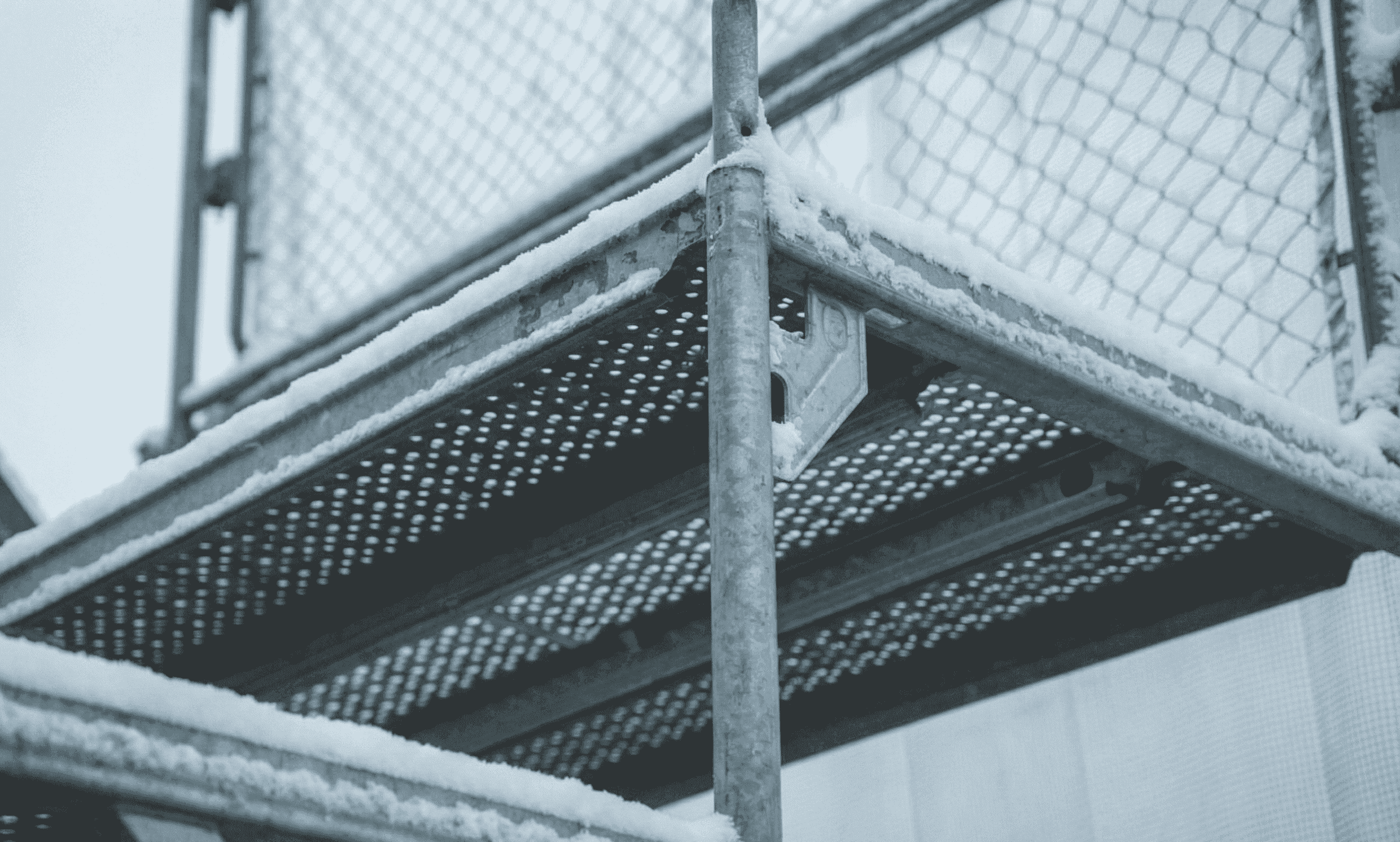
Snow is heavy. A cubic meter of wet snow can weigh up to 800 kg. Flat roofs are a hazard. 2026 designs utilize pitched truss roofs (15-20 degrees) to encourage shedding, protecting the structure from collapse.
Pro Tip: Use heat-sealed shrink wrap. It creates a drum-tight seal that bonds to the structure, retaining heat and stopping the "flapping" that loosens ties over time.